


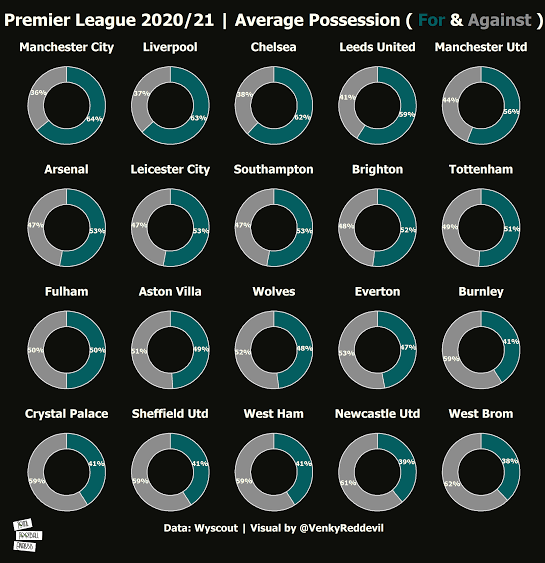
The 2009/2010 Premier League season highlighted a recurring tactical contradiction where sustained territorial control failed to translate into proportional goal output. Several prominent sides dominated match possession statistics through deliberate, short-passing networks, yet struggled to penetrate structured defensive blocks, generating high pass counts alongside minimal penalty-box shot volumes. For market participants evaluating Asian Handicap and goal total lines, relying uncritically on possession metrics created systematic pricing traps, as bookmaker models routinely overvalued teams that circulated the ball without manufacturing high-quality scoring opportunities.
The Mechanical Distinction Between Sterile Circulation and Penetrative Dominance
High possession numbers often masked severe structural deficiencies in spatial progression and attacking tempo during this campaign. When a side cycled possession laterally across the midfield line without runners making vertical runs into the channels, defending teams maintained compact shapes with minimal physical exertion. This sterile possession dynamic produced high possession percentages but exceptionally low expected goals, leading to low-scoring draws or narrow one-goal margins that routinely failed to clear standard handicap spreads.
Evaluating the true offensive threat of possession-dominant favorites required monitoring market spread adjustments on a recognized betting platform. A rigorous cross-examination of live Asian Handicap movements on ufabet เข้าสู่ระบบ demonstrated that public betting volume persistently backed famous possession sides at heavily shaded lines, creating actionable value on disciplined underdogs equipped to absorb low-tempo possession without conceding high-probability scoring chances.
Statistical Profiling of 2009/2010 High-Possession, Low-Shot Outfits
Analyzing season-long underlying metrics reveals a stark divide between teams that weaponized possession into high-volume shooting and those that stagnated in non-threatening areas of the pitch. While Chelsea combined high possession with vertical penetration to produce historic goal tallies, clubs like Liverpool, Fulham, and late-season Arsenal frequently logged massive possession numbers while generating fewer shots on target than direct, counter-attacking mid-table outfits.
Examining the ratio of completed passes to shots on target inside the penalty box exposes which teams routinely engaged in sterile possession across thirty-eight matchweeks. The following comparative tracking data illustrates how high ball control failed to guarantee dangerous shot production throughout the 2009/2010 season.
| Club | Average Possession % | Completed Passes Per Match | Penalty Box Shots Per Match | Pass-to-Shot Ratio |
| Liverpool | 56.4% | 442.1 | 4.8 | 92.1 : 1 |
| Fulham | 51.8% | 398.6 | 3.9 | 102.2 : 1 |
| Arsenal (Without Van Persie/Fabregas) | 58.9% | 512.3 | 5.1 | 100.5 : 1 |
| Blackburn Rovers (Direct Low Block) | 41.2% | 280.4 | 4.6 | 60.9 : 1 |
| Stoke City (Direct Aerial Profile) | 38.5% | 245.1 | 4.2 | 58.4 : 1 |
The recorded metrics confirm that clubs suffering from sterile possession required nearly double the pass volume of direct teams just to manufacture a single shot inside the eighteen-yard box. Liverpool and Fulham controlled tempo across the majority of their fixtures, yet their inability to turn territorial control into penalty box penetration systematically compressed their goal ceilings, making Under 2.5 goals and plus-handicap opponents recurring value positions.
The Spatial Breakdown of Lateral Midfield Traps
The inability of sterile possession teams to create shooting opportunities stemmed from a predictable spatial compression engineered by organized low-block defenses.
Attacking Side Cycles Ball Laterally in Middle Third
│
▼
Defending Low Block Shifts Horizontally as a Unified Unit
│
▼
Central Passing Lanes Denied ──> Attacking Team Forced into Deep Wide Areas
│
▼
Low-Probability Long-Range Shot or Blocked Cross ──> Offensive Breakdown
This structural cycle explains why teams lacking dynamic dribblers or physical aerial targets accumulated hundreds of meaningless passes while generating virtually zero high-danger scoring chances against compact defensive opposition.
Full-Back Overlap Deficits and Lack of Central Penetration
A primary cause of sterile possession in the 2009/2010 season was the absence of explosive wide runners capable of pulling center-backs out of position. When attacking full-backs failed to overlap past the midfield line, defending full-backs remained tucked inside, eliminating space for central playmakers to operate. This structural congestion forced possession sides to settle for contested long-range efforts that presented minimal threat to set goalkeepers.
Navigating these tactical bottlenecks requires deep situational analysis, contrasting sharply with the static probability mechanics found within a dedicated casino online where game algorithms operate with fixed mathematical distributions. In competitive football markets, recognizing that a possession team lacks the wide pace to stretch opposing defenses allows sharp bettors to fade inflated multi-goal expectations before opening spreads adjust.
Pricing Inefficiencies in Asian Handicap and Team Total Markets
Bookmaker algorithms throughout 2009/2010 consistently treated high possession as a direct proxy for match dominance, resulting in overinflated spreads on possession-heavy favorites. Betting markets routinely posted lines requiring teams like Liverpool to cover -1.25 or -1.5 goals away from home against low-block defenses, failing to recognize that their deliberate build-up play rarely produced runaway multi-goal victories.
- Underpriced Plus-Handicap Underdogs: Low-block opponents covering tight +1.0 or +1.5 spreads against sterile possession giants.
- Overvalued Team Total Overs: Inflated individual team goal lines (Over 1.5 and 2.0) that ignored low shot-conversion efficiency.
- Mispriced First-Half Unders: Scoreless opening halves resulting from slow, risk-averse ball circulation during early feeling-out phases.
Exploiting these pricing errors enabled disciplined participants to extract consistent yield by backing pragmatic, counter-attacking underdogs that conceded territorial possession while completely denying high-danger shooting zones.
Vulnerability to Fast Transitional Counter-Attacks
Teams that committed high numbers forward to sustain possession without generating shots frequently exposed themselves to fatal transitional counters. By advancing both full-backs and holding midfielders into the attacking half, sterile possession teams left vast open space behind their defensive lines. A single turnover in the final third often resulted in an immediate, uncontested breakaway for the defending side.
This structural vulnerability regularly transformed apparent domination into shock 0-1 or 1-2 home defeats. When a sterile possession favorite conceded an opportunistic counter-attacking goal, their slow, methodical build-up play proved incapable of breaking down an even deeper defensive low block, cementing profitable outcomes for underdog handicap backers.
Situational Conditions That Restored Penetrative Efficiency
Despite the unreliability of sterile possession profiles, certain situational catalysts occasionally transformed slow-passing teams into potent attacking units. The return of an elite individual dribbler or an early set-piece goal completely altered match dynamics by forcing the defensive low block to abandon its compressed shape.
When a previously passive opponent was forced to step out of its defensive shell to chase an equalizer, passing lanes opened up behind their midfield line. In these specific conditional match states, possession teams finally found the operational space required to execute penetrative passes, warning bettors that sterile possession tendencies could reverse rapidly once game-state pressure compromised the opponent’s defensive posture.
Summary
Sterile possession in the 2009/2010 Premier League highlighted the critical flaw of using raw pass volume and possession percentages to project goal-scoring output. Teams like Liverpool and Fulham frequently controlled tempo without manufacturing high-quality shots inside the penalty box, leading to systematic market overvaluation on Asian Handicap spreads. Profitable handicapping required decoupling territorial ball retention from authentic attacking penetration, identifying low-block defensive resilience, and capitalizing on inflated lines before bookmakers aligned prices with true chance-creation efficiency.
